How 3D Walkthrough Is Changing the Way People Buy Real Estate
Discover how 3D walkthrough technology is transforming real estate by helping buyers explore properties, compare homes, and decide faster.
 solidtwin
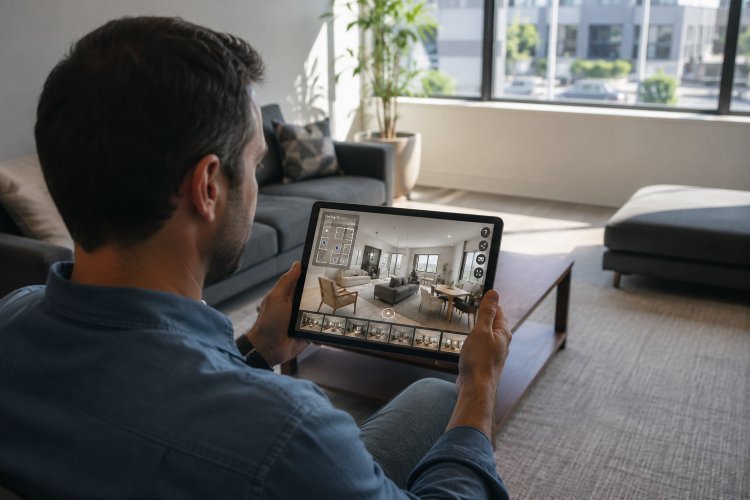
There was a time when buying a home meant relying almost entirely on a handful of photos and your imagination to fill in the rest. That's no longer the case. A 3D walkthrough now lets buyers step inside a property without leaving their couch, and it's reshaping the entire process of finding and choosing a home.
This shift isn't just about convenience. It's changing how people search, how they compare properties, and how quickly they're able to make up their minds.
What Exactly Is a 3D Walkthrough?
A 3D walkthrough is a digital recreation of a physical space that buyers can explore on their own terms. Instead of flipping through static images, they can move from room to room, look up at ceilings, check out closet space, and get a genuine feel for how a home flows.
Some versions are fully interactive, letting users click and drag their way through a floor plan. Others are dollhouse-style views that show an entire property from above, with the option to zoom into individual rooms. Either way, the experience is far closer to actually being there than any photo gallery could offer.
Why This Technology Took Off
A few things came together at once to make 3D walkthroughs mainstream. Cameras and scanning tools capable of capturing accurate 3D data became affordable. Internet speeds improved enough that these heavy visual files could load quickly on ordinary devices. And buyer habits shifted toward doing most of their early research online, well before contacting an agent.
Put those trends together, and it's no surprise that 3D walkthroughs went from a niche feature to something buyers now expect on major listings.
How It's Reshaping the Buying Process
Buyers Start Their Search With More Information
In the past, a buyer's first real look at a home happened in person. Now, a 3D walkthrough gives them that first impression online. They can judge room sizes, layout, and natural light before ever picking up the phone to schedule a visit.
Fewer In-Person Visits, More Purposeful Ones
Agents have noticed that buyers who use a 3D walkthrough tend to request fewer showings overall. That's not because they're less interested. It's because they've already ruled out the homes that clearly won't work. The showings that do happen are more focused, with buyers arriving already fairly confident about what they're walking into.
Remote and Out-of-Town Buyers Gain Real Access
Relocating for work or moving to a new city used to mean either flying out for a rushed weekend of showings or buying somewhat blind. A 3D walkthrough changes that. Someone can seriously evaluate a property from anywhere, at any hour, without needing to coordinate travel just to see if a home is worth pursuing further.
Faster Comparisons Between Listings
House hunting almost always involves juggling multiple options. With 3D walkthroughs, buyers can revisit any listing as many times as they want, compare kitchen layouts side by side, or double-check a bedroom size without needing to physically return to a property. That back-and-forth used to eat up a lot of time; now it takes a few clicks.
What This Means for Sellers and Agents
The benefits aren't one-sided. Listings with a 3D walkthrough tend to attract more serious buyers, since anyone reaching out has typically already done a deeper level of research. That cuts down on casual visits and speeds up the overall timeline from listing to offer.
Agents also gain a marketing tool that works around the clock. A walkthrough link can be shared instantly, viewed on any device, and doesn't require scheduling a single open house. For busy agents juggling multiple listings, that kind of always-on access is a real advantage.
The Technology Behind the Experience
Most 3D walkthroughs are built using specialized cameras that capture a space from many angles, then stitch that data into a navigable model. Some use laser measurement tools to also generate accurate floor plans alongside the visual tour. The result is processed and hosted online, so buyers can access it through a simple link in a web browser, with no special software required.
Newer tools have also made this more accessible to smaller agencies and independent agents, not just large real estate firms. What once required expensive, specialized equipment can now often be done with a smartphone and the right app, which has helped 3D walkthroughs spread well beyond luxury listings.
Does It Replace In-Person Visits?
Not entirely, and most buyers still want to walk through their top choice before making an offer. What a 3D walkthrough really does is move that in-person visit later in the process. Instead of being the first step, it becomes the final confirmation before signing anything.
This matters most in fast-moving markets, where buyers who've already narrowed things down virtually can act quickly once they find a property worth pursuing. In a competitive bidding situation, that head start can make a real difference.
Things to Keep in Mind
Not every 3D walkthrough is equally useful. A good one should let buyers move freely rather than just click through a few fixed points, should reflect accurate room proportions, and should load smoothly on both phones and computers. A clunky or overly limited tour won't offer the same value as one that feels close to an actual visit.
Looking Ahead
As more listings adopt 3D walkthroughs, they're quickly becoming a standard part of how real estate is marketed rather than a special add-on. Buyers have gotten used to this level of detail before ever leaving home, and that expectation isn't likely to fade.
For anyone involved in buying, selling, or marketing property, the message is fairly clear: a 3D walkthrough isn't just a nice extra anymore. It's becoming one of the most useful tools in the entire process, helping people move from curiosity to a confident decision faster than traditional methods ever allowed.
Final Thoughts
Real estate has always depended on buyers being able to picture themselves in a space. A 3D walkthrough makes that easier than photos or written descriptions ever could, cutting down on wasted visits and helping people compare their options with much more clarity. As the technology keeps improving, it's likely to become less of a feature to highlight and more of a basic expectation for any serious listing.