
Portfolio Monitoring: A Complete Guide to Managing Business Risk
Portfolio Monitoring is the ongoing process of tracking, evaluating, and managing the performance and risk of a portfolio. A portfolio may consist of loans, investments, trade receivables, customers, suppliers, or insurance policies.
 credhive
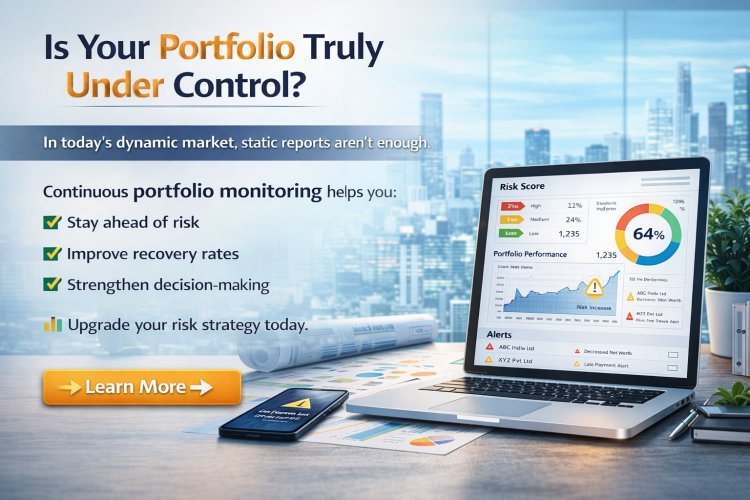
In an increasingly competitive business environment, organizations need more than periodic reviews to manage their financial assets and customer portfolios effectively. Market conditions, customer behavior, and financial performance can change rapidly, making continuous monitoring essential for minimizing risk and maximizing returns. This is where Portfolio Monitoring plays a critical role.
Portfolio Monitoring is the ongoing process of tracking, evaluating, and managing the performance and risk of a portfolio. A portfolio may consist of loans, investments, trade receivables, customers, suppliers, or insurance policies. By continuously monitoring key performance indicators (KPIs), businesses can identify early warning signals, detect financial stress, and make proactive decisions before problems escalate.
Banks, NBFCs, fintech companies, insurers, and enterprises increasingly rely on AI-powered Portfolio Monitoring solutions to improve credit risk management, strengthen compliance, and enhance operational efficiency.
What is Portfolio Monitoring?
Portfolio Monitoring is the continuous evaluation of a portfolio's financial health, operational performance, and overall risk exposure. Rather than relying on periodic assessments, businesses use automated tools and analytics to gain real-time visibility into changes affecting portfolio quality.
The objective is to identify emerging risks, monitor customer behavior, optimize asset performance, and support strategic decision-making.
Whether monitoring loan portfolios, investment assets, customer accounts, or supplier relationships, Portfolio Monitoring helps organizations maintain healthier portfolios and reduce financial losses.
Why is Portfolio Monitoring Important?
A robust Portfolio Monitoring strategy provides valuable insights that help businesses respond quickly to changing conditions.
Detects Risks Early
Continuous monitoring helps identify payment delays, declining financial performance, and operational issues before they become serious problems.
Improves Decision-Making
Real-time business intelligence enables management to make faster, more informed decisions.
Enhances Portfolio Performance
Regular analysis helps optimize asset allocation, customer management, and investment strategies.
Supports Regulatory Compliance
Financial institutions use Portfolio Monitoring to meet regulatory reporting and governance requirements.
Improves Customer Relationships
Businesses can proactively engage customers showing early signs of financial stress, strengthening long-term relationships.
How Portfolio Monitoring Works
An effective Portfolio Monitoring process includes several key stages.
Step 1: Data Collection
Organizations gather information from multiple trusted sources, including:
- Financial statements
- Credit bureau reports
- Banking transactions
- Payment histories
- Business reports
- Market intelligence
- ERP and CRM systems
Step 2: Performance Analysis
Key performance indicators are evaluated to measure portfolio health.
Common metrics include:
- Portfolio growth
- Return on Investment (ROI)
- Default rates
- Collection efficiency
- Customer retention
- Profitability
- Asset quality
Step 3: Risk Assessment
Businesses continuously assess:
- Credit Risk
- Counterparty Risk
- Operational Risk
- Compliance Risk
- Market Risk
Step 4: Automated Alerts
AI-powered monitoring systems generate real-time alerts whenever predefined thresholds or risk indicators are triggered.
Key Features of Portfolio Monitoring
Real-Time Dashboards
Interactive dashboards provide complete visibility into portfolio performance.
Automated Risk Alerts
Organizations receive immediate notifications about emerging financial or operational risks.
Predictive Analytics
Machine learning models forecast future portfolio trends and identify potential defaults.
Portfolio Segmentation
Businesses analyze portfolios based on customer type, geography, industry, product, or risk level.
Comprehensive Reporting
Detailed reports support strategic planning, audits, and regulatory compliance.
Benefits of Portfolio Monitoring
Better Risk Management
Continuous monitoring reduces financial losses by identifying risks before they escalate.
Increased Operational Efficiency
Automation reduces manual reporting and improves decision-making speed.
Improved Portfolio Quality
Organizations can optimize portfolio performance through timely interventions.
Stronger Compliance
Accurate reporting and complete audit trails simplify regulatory compliance.
Enhanced Profitability
Data-driven insights help maximize returns while minimizing unnecessary exposure to risk.
Technology Behind Portfolio Monitoring
Modern Portfolio Monitoring platforms use advanced technologies to improve accuracy and efficiency.
Artificial Intelligence (AI)
AI identifies hidden risk patterns, predicts future outcomes, and enhances decision-making.
Machine Learning
Machine learning continuously improves portfolio risk models using historical and real-time data.
Cloud-Based Platforms
Cloud technology provides secure, scalable access to portfolio information from anywhere.
Automation
Automated workflows streamline reporting, monitoring, and alert generation.
Business Intelligence
Integrated business intelligence platforms combine financial, operational, and market data into a single view for comprehensive portfolio analysis.
Why Businesses Choose Credhive
Effective Portfolio Monitoring requires more than basic reporting—it demands real-time intelligence and proactive risk management. Credhive offers an advanced AI-powered Portfolio Monitoring platform that combines Business Information Reports, a robust Credit Decision Engine, Vendor Risk Assessment, Risk Intelligence, MCA filings, GST data, litigation records, financial insights, director linkages, and Early Warning Signals into one unified solution. This enables banks, NBFCs, fintech companies, insurers, and enterprises to continuously monitor customer and business portfolios, identify emerging risks, improve underwriting decisions, strengthen compliance, and make faster, data-driven decisions. With Credhive, organizations gain complete visibility into portfolio health while reducing risk and improving operational performance.
Best Practices for Effective Portfolio Monitoring
Define Meaningful KPIs
Track financial and operational metrics aligned with business objectives.
Use Verified Data
Accurate business information improves portfolio analysis and risk assessment.
Monitor Continuously
Real-time monitoring is more effective than periodic reviews.
Automate Risk Detection
Implement AI-powered alerts to respond quickly to changing portfolio conditions.
Review Portfolio Strategy Regularly
Update monitoring processes and risk models based on market trends and business goals.
Conclusion
Portfolio Monitoring is an essential component of modern business, lending, and investment management. By continuously tracking portfolio performance, identifying Early Warning Signals, and leveraging AI-powered analytics, businesses can improve decision-making, reduce financial risk, and maximize long-term value.
Organizations that invest in intelligent Portfolio Monitoring solutions gain a competitive advantage through improved portfolio quality, enhanced compliance, better customer relationships, and stronger financial performance. In today's data-driven business environment, continuous portfolio monitoring is no longer optional—it is a strategic necessity for sustainable growth.