3PL Logistics Company in India: What Businesses Should Evaluate Before Outsourcing
If there is one practical lesson worth remembering, it is this: logistics problems rarely appear where people expect them. Most businesses focus heavily on transportation while overlooking inventory accuracy, operational communication, and process consistency. A repeated mistake organizations still make is selecting partners primarily on pricing without understanding how those partners perform during operational stress.
 Onpointlogistics
Most logistics problems do not begin when a shipment leaves the warehouse. They start much earlier, usually during planning, inventory forecasting, warehouse allocation, or communication between teams that rarely work from the same operational reality.
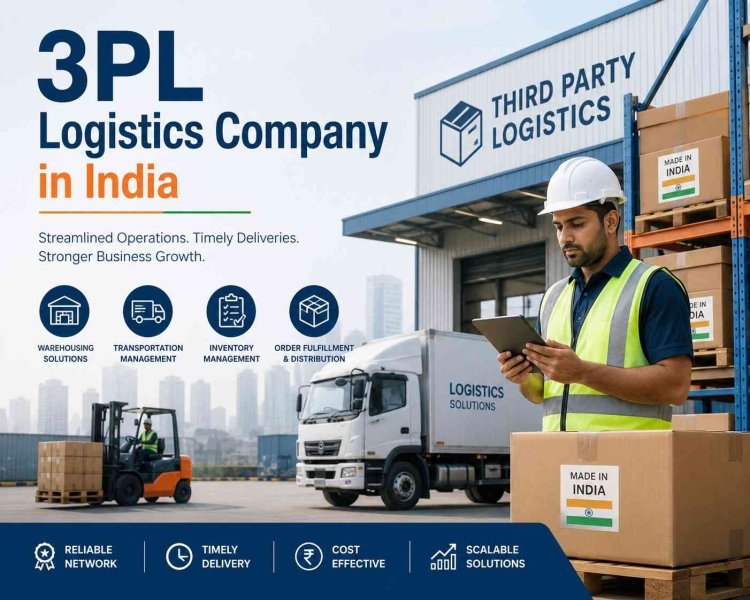
This is one reason businesses start looking for a reliable 3pl logistics company in India. Initially, the goal is often simple. Reduce operational pressure, improve delivery performance, and avoid building an expensive logistics network internally. What many organizations discover later is that outsourcing logistics is not the same as outsourcing responsibility.
The real challenge begins after implementation. Inventory movement becomes dependent on external teams. Customer commitments rely on warehouse accuracy. Delivery timelines become connected to processes outside direct company control. This is where operational discipline matters far more than vendor presentations or pricing sheets.
Key Takeaways
- Logistics failures often originate from poor inventory visibility rather than transportation issues.
- The cheapest logistics contract frequently creates higher operational costs later.
- Scaling warehouse operations exposes process weaknesses that remain hidden at lower volumes.
- Communication gaps between internal teams and logistics partners create avoidable delays.
- Long-term operational consistency matters more than rapid implementation.
Why Businesses Move Toward Third-Party Logistics
Few companies decide to work with a logistics partner because they love outsourcing. Most reach that point because growth creates complexity.
A business that ships fifty orders daily can manage logistics very differently from one handling five thousand. Inventory starts spreading across multiple locations. Regional delivery commitments become harder to maintain. Warehouse staffing becomes unpredictable during seasonal spikes.
At this stage, a 3pl logistics company in India can provide access to infrastructure that would otherwise require years of investment. Warehouses, transportation networks, fulfillment systems, and operational manpower already exist.
The mistake many organizations make is assuming logistics infrastructure automatically creates operational efficiency.
In reality, implementation is often easier than long-term operational management.
A warehouse can be integrated within weeks. Maintaining inventory accuracy above acceptable thresholds month after month is far more difficult. Many businesses underestimate this difference.
What Actually Breaks After Implementation
The technical setup is rarely the hardest part. Managing long-term operational consistency usually is.
One thing many teams underestimate is how quickly small process failures multiply across a supply chain. A minor inventory mismatch can create shipment delays. Delayed shipments create customer service escalations. Escalations increase manual intervention. Eventually, operational teams spend more time correcting errors than managing growth.
I have seen organizations complete logistics transitions successfully and still struggle six months later because warehouse procedures were never fully standardized.
This is usually where projects become messy.
A company may invest heavily in warehouse and shipment management systems but continue relying on spreadsheets for exceptions and manual adjustments. The result is conflicting inventory records across departments.
Another common issue appears during demand fluctuations. Logistics providers may perform well under normal operating conditions but struggle when order volumes suddenly increase. Businesses often discover capacity limitations only after peak season begins.
That realization usually arrives too late.
The Difference Between Cost Savings and Operational Value
Many procurement teams focus almost entirely on transportation rates and storage costs.
That approach looks logical during vendor evaluation.
It often becomes expensive later.
The lowest-cost provider may not offer the strongest operational controls. Poor inventory handling, delayed reporting, inconsistent dispatch procedures, and limited visibility can create hidden costs that never appear in the original contract.
A business may save money on warehousing fees while losing significantly more through stock inaccuracies, delayed deliveries, or customer dissatisfaction.
Experienced operators evaluate logistics partnerships differently.
They examine questions such as:
- How quickly are inventory discrepancies resolved?
- What happens during unexpected volume surges?
- How are failed deliveries managed?
- What visibility exists across warehouse and transport operations?
- How reliable is communication during disruptions?
These factors often determine long-term performance more than transportation pricing.
This becomes particularly important when evaluating affordable 3pl logistics solutions. Affordability matters. Operational reliability matters more.
Why Inventory Visibility Creates More Problems Than Transportation
Many people assume transportation is the most difficult part of logistics.
From an operational perspective, inventory management frequently creates larger challenges.
When inventory records become unreliable, every downstream process suffers.
Orders are accepted for unavailable stock. Dispatch teams work with incorrect information. Replenishment decisions become inaccurate. Customer expectations become difficult to manage.
This is where logistics and inventory solutions for businesses become critical.
The strongest logistics partners do more than store products. They create visibility.
Inventory accuracy requires disciplined receiving processes, cycle counting, stock movement tracking, exception handling, and reporting consistency. None of these activities attract much attention until something goes wrong.
Most planning timelines look reasonable until real execution begins.
A warehouse operating at 70 percent capacity behaves differently from one operating at 95 percent capacity. Congestion increases. Picking times rise. Errors become more common.
Organizations that fail to plan for these operational realities often experience performance declines precisely when business growth accelerates.
How Experienced Teams Evaluate a 3PL Partner
The discussion around 3pl logistics services in India often focuses on geographic coverage and service offerings.
Those factors matter.
However, experienced teams usually pay equal attention to operational maturity.
A provider handling multiple warehouses, transportation networks, and fulfillment operations requires strong internal controls. Without those controls, growth can actually reduce service quality.
One useful indicator is how a provider handles exceptions.
Normal shipments are easy.
The real test occurs when inventory arrives late, vehicles break down, customer requirements change, or unexpected disruptions occur.
Strong operators have documented escalation processes and clear accountability.
Weak operators rely on improvisation.
The difference becomes obvious under pressure.
Another area businesses often ignore involves reporting quality. Operational decisions depend on accurate information. Delayed or inconsistent reporting creates blind spots that affect forecasting, inventory planning, and customer commitments.
A capable third party logistics service provide should function as an operational extension of the business rather than a disconnected vendor.
That distinction matters more than most companies realize.
The Future of End-to-End Logistics Operations
Technology adoption continues across the logistics sector, but many expectations remain unrealistic.
Software improves visibility. It does not eliminate operational complexity.
Some organizations invest heavily in automation while neglecting process discipline. Others expect dashboards to solve problems that originate from inconsistent warehouse execution.
The future of end-to-end 3pl logistics services will likely be shaped by better integration between transportation, inventory management, forecasting, and customer communication.
However, technology alone will not determine success.
Operational consistency will.
Businesses increasingly expect real-time inventory updates, faster fulfillment cycles, regional distribution capabilities, and predictable delivery performance. Meeting those expectations requires process maturity as much as software investment.
The companies that perform well over the next few years will not necessarily be those with the most technology.
They will be the organizations that combine technology with disciplined execution.
Conclusion
If there is one practical lesson worth remembering, it is this: logistics problems rarely appear where people expect them. Most businesses focus heavily on transportation while overlooking inventory accuracy, operational communication, and process consistency.
A repeated mistake organizations still make is selecting partners primarily on pricing without understanding how those partners perform during operational stress.
The useful takeaway is simple. Evaluate logistics capabilities based on reliability under pressure, not performance during ideal conditions.
Looking ahead, logistics networks will become more integrated, data-driven, and customer-focused. Yet the businesses that gain the most value from a 3pl logistics company in India will still be the ones that build strong operational discipline around the partnership.
FAQs
1. What is the biggest benefit of working with a 3PL logistics provider?
Ans. The biggest benefit is operational scalability. Businesses can expand distribution and fulfillment capabilities without investing heavily in warehouses, transportation assets, and logistics manpower.
2. How do businesses choose the right 3PL logistics company in India?
Ans. Focus on operational reliability, inventory accuracy, reporting quality, geographic reach, and exception management rather than comparing transportation rates alone.
3. Are affordable 3PL logistics solutions suitable for growing businesses?
Ans. Yes, provided affordability does not come at the cost of visibility, service consistency, or inventory control. The cheapest option is not always the most economical long term.
4. Why do logistics implementations fail after launch?
Ans. Failures often result from poor process alignment, inaccurate inventory data, communication gaps, and unrealistic expectations regarding operational responsibilities.
5. What services are typically included in end-to-end 3PL logistics services?
Ans. Services commonly include warehousing, inventory management, order fulfillment, transportation coordination, distribution, shipment tracking, and reporting support.